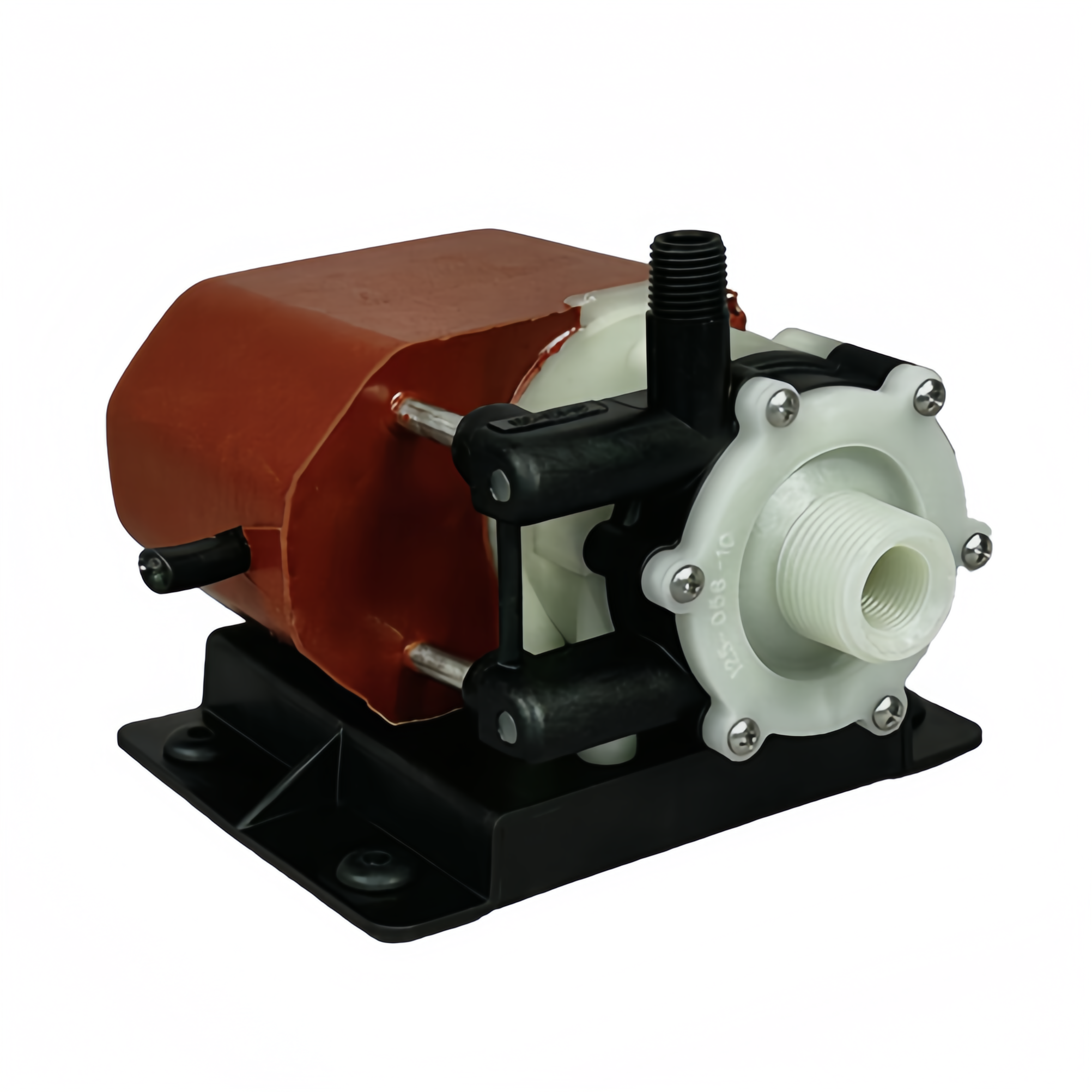
The information below applies only to MSWA brand marine air conditioning units and may not apply to other brands or systems.
For standard installations, each MSWA air conditioning unit requires its own circulation pump. Pump sizing depends on your MSWA unit capacity, installation layout, and plumbing run. Based on what most MSWA customers typically use, the following circulation pump sizes are common:
- MSWA 6,000–9,000 BTU units: most customers choose a 300 GPH circulation pump per unit
- MSWA 11,000–16,000 BTU units: most customers choose a 500 GPH circulation pump per unit
- MSWA 20,000–24,000 BTU units: most customers choose a 1,000 GPH circulation pump per unit
We carry two types of circulation pumps, and the correct choice also depends on where and how the pump is installed:
- Non-submersible pumps for dry, above-bilge installations (such as MarinAire magnetic-drive pumps)
- Submersible pumps for bilge installations (such as select March pumps)
(Note: the 1,000 GPH pump is not submersible)
Each pump has different head pressure ratings, and factors such as hose length, vertical lift, fittings, and bends all affect flow.
Using one pump for multiple MSWA units
Some installations use a single circulation pump to supply multiple MSWA units. In these cases, the pump must be sized by combining the required flow for each unit, and a pump relay panel is required to ensure proper operation.
Example:
Two MSWA 16K units (500 GPH each) would typically require a 1,000 GPH circulation pump and a compatible pump relay panel.
Proper sizing is critical:
- Undersized pumps may prevent one or more units from operating correctly or keeping up during peak heat
- Oversized pumps may require reducers or a ball valve to regulate flow depending on conditions
Because shared-pump systems are more dependent on plumbing layout and head pressure, we strongly recommend consulting a qualified marine air conditioning installer to confirm pump sizing and system design.