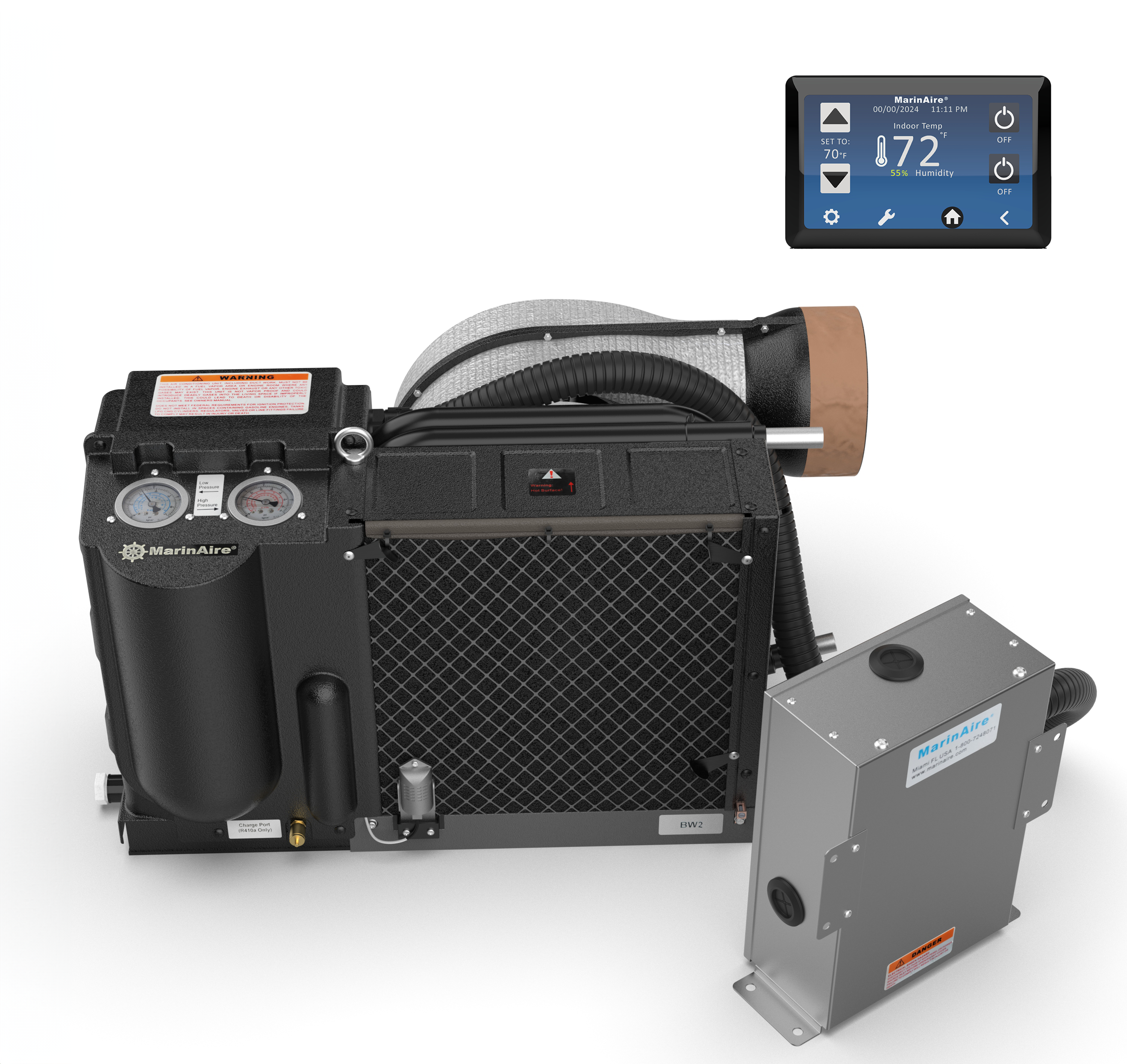
There is no single “one-size-fits-all” seawater pump for marine air conditioners. The correct pump size depends on three factors: the air-conditioning unit, your specific installation, and the pump’s performance characteristics.
Each model lists a “Water Flow” value in the Technical Specifications tab. This rating refers to the required water flow at the unit outlet, not the pump size itself.
Because water flow is reduced by hose length, fittings, and vertical lift (head pressure), the pump selected must be capable of delivering the required flow at your actual installation head. Always reference the pump’s performance curve to confirm this.
General pump sizing guidelines
(Assumes average hose lengths and typical installations)
- 6,000 – 9,000 BTU units: 300 GPH pump per unit
- 11,000 – 16,000 BTU units: 500 GPH pump per unit
- 20,000 – 24,000 BTU units: 1,000 GPH pump per unit
Multiple units
If you are running more than one air conditioner:
- Two 16,000 BTU units require either:
Two 500 GPH pumps, or
One 1,000 GPH pump used with a proper relay/control panel
Important notes on pump
- Do not oversize the pump. Excessive flow or pressure can reduce heat-exchange efficiency, increase component wear, and cause unnecessary noise or vibration. The goal is proper, consistent flow — not maximum flow.
- Only use a pump designed for marine air-conditioning systems, such as a magnetic-drive seawater pump.
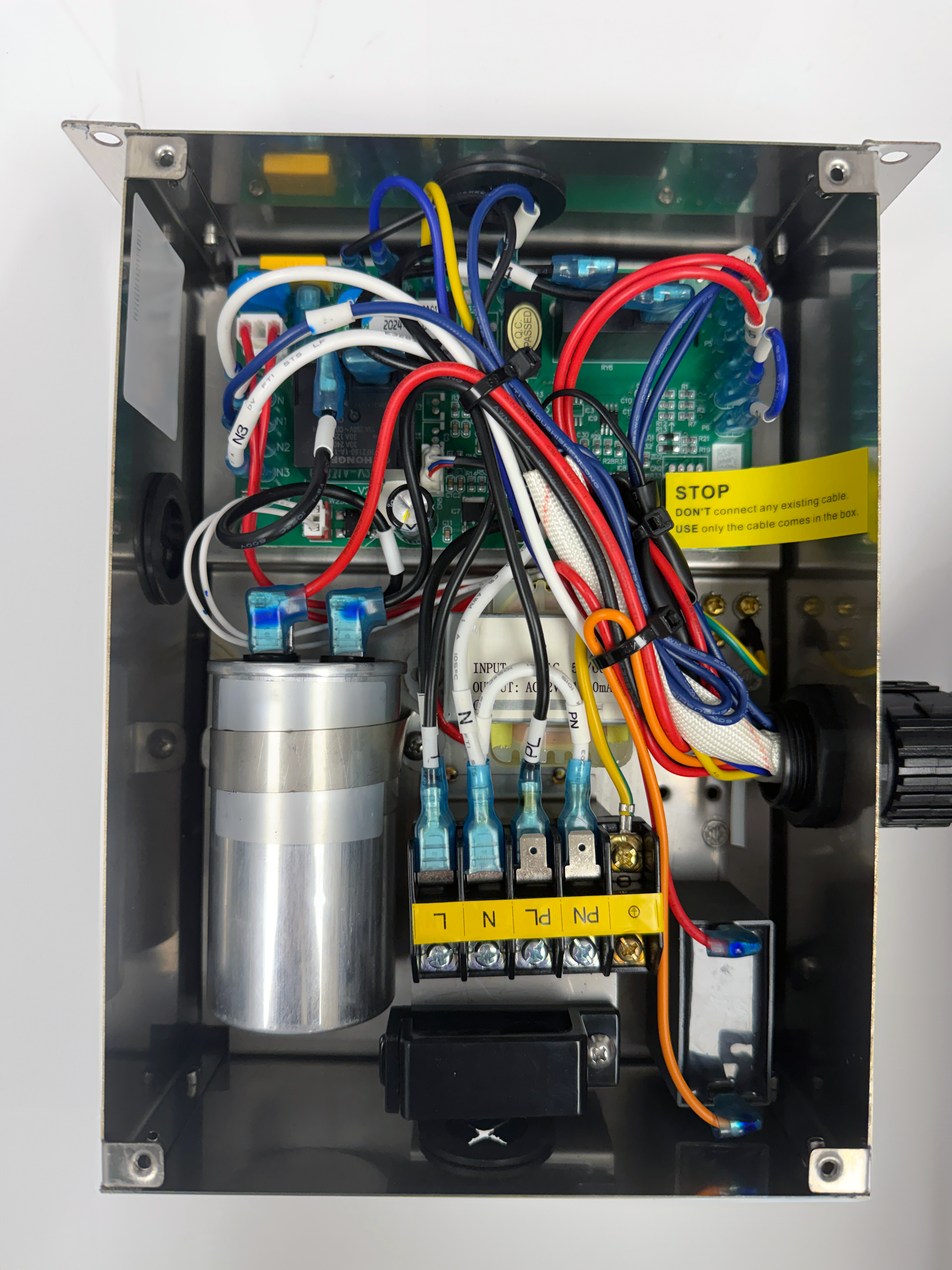
- Do not use pool pumps, general-purpose circulation pumps, or Cal-style pumps. These pumps draw significantly higher current and can damage the unit’s control circuitry or burn out the relay.
Tip: If your installation involves unusually long hose runs, multiple elevation changes, or shared manifolds, consult the pump flow curve or a marine HVAC professional to ensure proper sizing.